
Hello everyone, I am Axing from the strategy team.
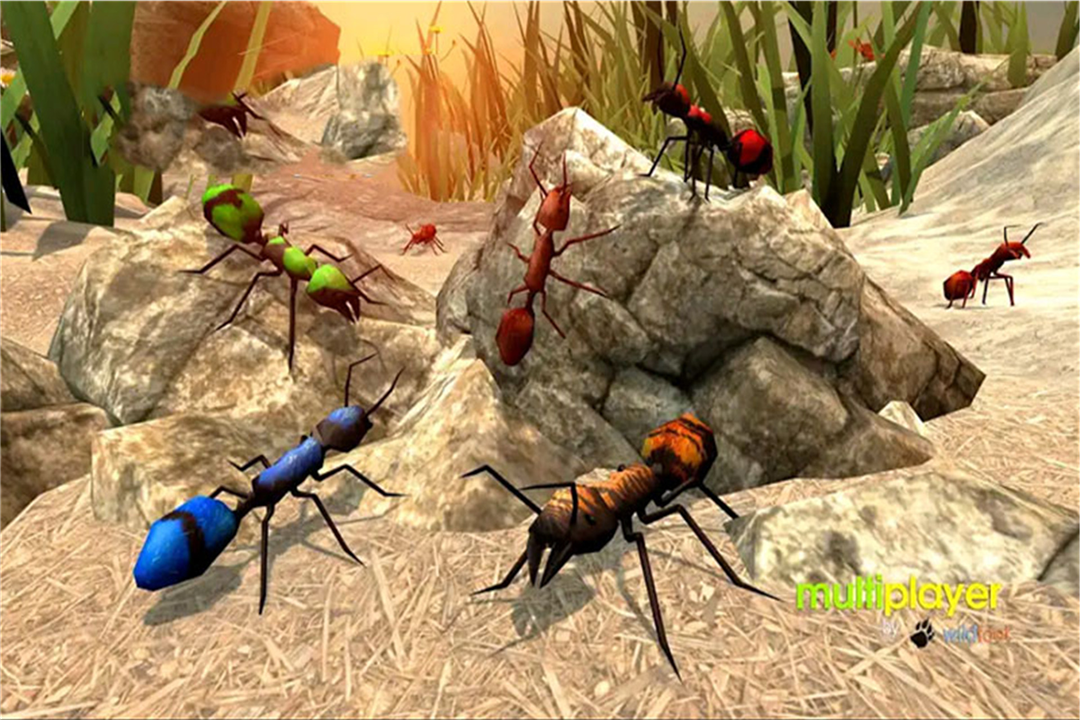
Recently, I discovered this game called "Crazy Acceleration in Everyone's Acceleration" while playing "Cash Missions". At first glance, I thought it was a casual hang-up game, but it actually hides the numerical design of the survival simulation quite deeply. Today I spent two days running data to talk to you about its numerical model and the most efficient survival strategy.
Let's look at the core numbers first. Ants in the game have three basic attributes: speed (determines the movement time), endurance (determines the number of consecutive jobs), and collection efficiency (the amount of food obtained per unit time). The refresh mechanism of natural enemies is "threat value accumulation" - every time you go out to collect, the threat value will increase. When the threat value reaches the threshold, the natural enemies will be refreshed. At the same time, there are two types of food refresh points: fixed resources (which exist permanently, but need to be cooled down after each collection) and random resources (one-time, random location).
Here's the key point: There are diminishing returns to speed and endurance. The initial speed reduction of 1 point reduces the movement time by 0.5 seconds, but after 10 speed points, it only reduces the movement time by 0.1 seconds. The gain in collection efficiency is linear, with a fixed increase of 15% at each level. This means that acceleration in the early stage is the optimal solution, and efficiency and endurance must be collected in the middle and late stages.
After my repeated testing (control variable method, only changing one attribute at a time), the best evolution path in the first 30 minutes is: speed → endurance → collection efficiency. The specific steps are very simple. At the beginning, increase the speed to level 5. This can expand the exploration radius by about 30% and quickly find the nearest fixed food point. Then increase the endurance to level 3 to ensure that you can carry it twice in a row without getting tired - the fatigue state will reduce the efficiency by 50%, which is very disadvantageous. After that, the collection efficiency will be fully improved, and food acquisition will be increased by 15% at each level. With fixed food points, resources can be accumulated quickly.
There are also numerical techniques for avoiding natural enemies. There is a warning time when natural enemies appear. The warning time varies according to the level of the threat value: when the threat value is lower than 50%, the warning time is 3 seconds, and when the threat value is higher than 80%, the warning time is only 1 second. Therefore, the optimal strategy is "run more when the threat is low, and hibernate when the threat is high." Specific operations: When the threat value reaches 60%, stop going out and consume food at home to produce worker ants (every 10 food consumed reduces the threat value by 5%). This ensures survival without wasting efficiency.
I tested two genres: one is "speed endurance flow" and the other is "acquisition efficiency flow". Comparing the same time (90 minutes in the game): the final food inventory of the speed endurance stream is 1320 units and the number of ants is 8; the final food inventory of the collection efficiency stream is 980 units and the number of ants is 6. The conclusion is obvious: under limited resources, the combination of speed + endurance can allow your ants to use the time window more efficiently, forming a snowball advantage.
Of course, this is not the final answer. As the "Queen Upgrade" is unlocked in the middle of the game, the numerical model will change again. I'll refresh the data for a few more rounds and come back to update the advanced strategy.
The above is the preliminary numerical analysis of Ah Xing. I hope it will be helpful to everyone to get cash on the list. If you have different test results, please reply to the discussion, let's let the data speak 😎