
As a viewer who watches KPL and LPL all year round, I have always been curious about the "competitiveness" of stand-alone games. I recently got into "Cells Reborn" and played it for more than 50 hours. I found that although this game is a roguelike, its balance adjustment ideas have a lot in common with the e-sports version update, which is worth talking about.
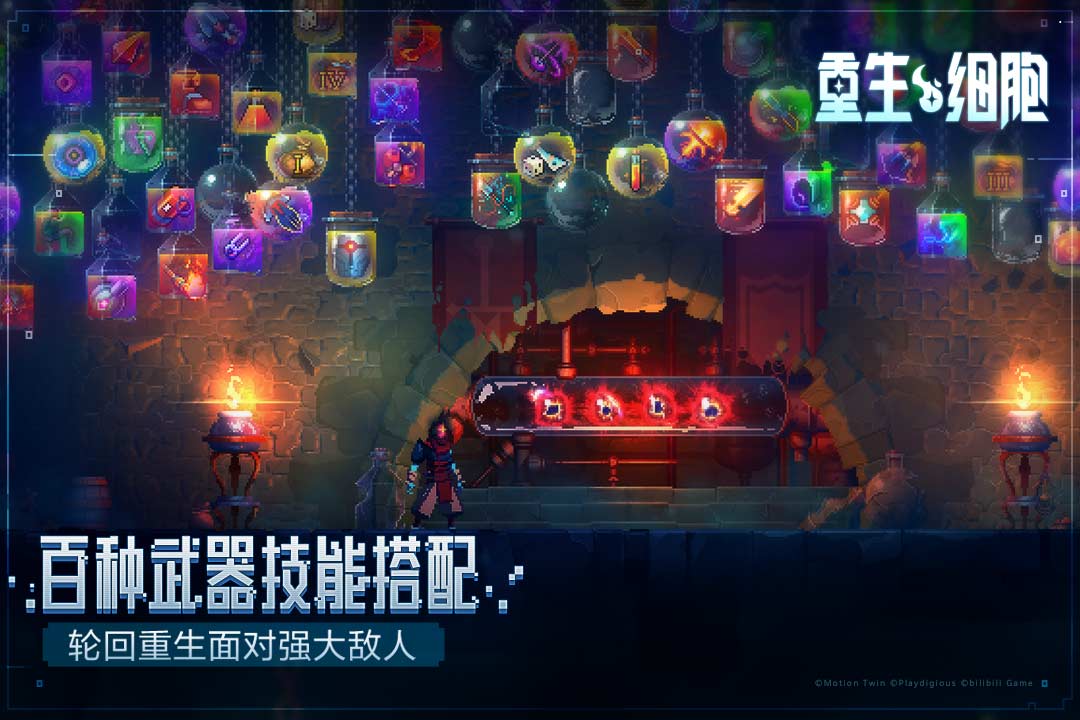
Let's talk about the balance of the weapon pool first. There are currently nearly a hundred weapons and skills in this game, but the mainstream routines are actually very solid - such as "electric whip + displacement" or "double critical dagger + shield counter". In high difficulty, players can almost only choose a few sets of ceiling equipment. This is similar to the reason why a certain hero version in MOBA games is so strong that the BP rate is abnormally high. Fortunately, the development team will take action against overly powerful weapons in every major version. For example, the previous "Great Sword" and "Circle Arrow Tower" have had their base damage and critical hit multiplier reduced, forcing players to try new ways of playing. However, some unpopular weapons, such as the "Cursed Blade" and "Heavy Crossbow", have beautiful mechanics, but the actual benefits are dragged down by the distribution of maps and monsters, resulting in no one using them for a long time. This is very similar to the situation of some unpopular heroes in LOL - it's not that the values are not good, but the actual combat rhythm is not suitable.
Let's talk about the relationship between the difficulty curve and the competitive environment. The BOSS design and monster configuration of this game actually force players to practice their "game" awareness. For example, multi-stage skill BOSS such as the Guardian and the Time Guardian, you must predict your position, calculate skill CD, and manage resources just like in a team battle. However, at low difficulty, players can rely on blood bottles to carry on, but at high difficulty, the fault tolerance rate drops sharply. This gap is similar to the "Platinum-Diamond" rank gap in Honor of Kings, which is the hardest hit area for player losses. I suggest that the production team can refer to the "countermatching" idea of e-sports, such as creating differentiated variations in the types of mobs and distribution of elite monsters under different difficulties, rather than simply stacking values and damage multipliers. This can more smoothly guide players to adapt to high-intensity confrontations.
Finally, I would like to mention the impact of version updates on the speedrunning environment. Rebirth Cell now has a complete speedrunning community. Every time a patch adjusts weapon coefficients or map generation logic, it will directly shake the world record. For example, the triggering mechanism of "Guardian's Eye" was changed previously, which forced many bosses to retrain their routes. I have also seen this kind of shock of version changes when watching LPL and KPL players being forced to practice new heroes. But the good news is that the development team will release changes in the test server in advance for each update to allow high-level players to give feedback. This is worth learning from the planning of many mobile competitive games - balance is not one-size-fits-all, but requires joint calibration with community participation.
Generally speaking, although "Rebirth Cell" is a stand-alone action game, its weapon diversity, difficulty ladder design and updated strategies already have the core of light competition. If you are a hardcore player, or are interested in game balance design, it is recommended to try the high difficulty and custom modes. You will experience the same pain and happiness as playing ranked games🤯.