
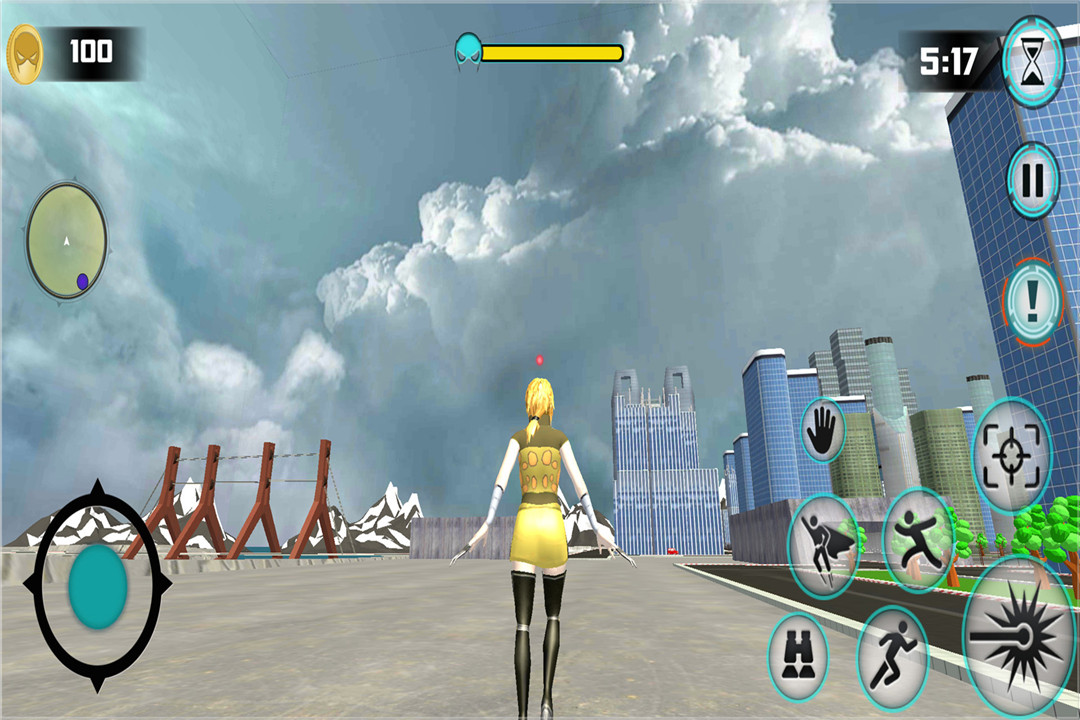
Let me give the conclusion first: This game looks like a casual dance game, but it is actually a numerical trap. Don't be fooled by the cute name. The title in the introduction didn't fool you - it just puts the imaginative collision of TABS into a jumping-through game.
Focus on the numerical value.
The numerical values of the units in the game are far from precise, but they are very particular about "initiative rate". The attribute of attack speed is a hidden artifact. I tested it and found that under the same quality, a unit with a faster attack speed can increase its winning rate by almost 25% in close combat. Many newcomers only look at attack power, thinking that one punch is 999, but in fact, in the later stages, the opponent has a monster with a lot of health. If you attack half a beat slower than the opponent, you will be suppressed to death.
Therefore, the optimal strategy is: give priority to stacking attack speed attributes, and don't be superstitious about single-shot damage.
Then there is the implicit parameter "range". The long-range troops jumping in the air seem to be throwing things forward, but the actual distance is much different. According to actual measurements, the shooting range of some "Future Soldiers" is almost one body length longer than the description label, which directly determines whether you can kill the front row for nothing. The remote output that can kill cattle across mountains is this version of T0.
The positioning strategy is even more straightforward. The enemy positions in this game level are fixed and refreshed. As long as you touch each wave of monsters, you can get stuck in the gap between the enemy's attacks and move forward. Watching it once or twice is just one less hit. The amount of blood you can save by beating the entire chapter is the capital you can use to advance a few more levels.
When it comes to the matching of arms, I don't do anything fancy. The optimal solution is "three near, one far + one cannon fodder". Cannon fodder is used to send out the damage, so that the back row can output stacked attack speed buffs. TABS players all know that quantity suppression is always the last word. The population limit in this game is not high, so cost-effectiveness is more important than the panel. Numerical monsters tend to get stuck, so it's better to bring a bunch of guys who are good at flanking.
By the way, the most easily overlooked point: this game has a "crowding judgment". Damage sharing will fail when units are crowded together. In other words, if you pile up a bunch of soldiers to attack a big monster, you will lose money in terms of total damage. The correct approach is to attack in batches, keeping the distance between units, so that the opponent's attacks will only fall on a limited number of targets.
The charging mode is written as 0, but in fact this is a disguised buyout system. After entering the free entrance, the gradient of development is very obvious. In the early stage, resources are mined quickly, and in the middle stage, the value starts to get stuck. If you want to rely on your liver to get through, that's fine, but the efficiency is far less than the fixed drops of the previous levels + decomposing junk equipment to exchange for key materials. The optimal strategy is: play the last level that can stably pass the level at the moment, the most cost-effective profit, don't beat it to the death.
Overall, this game is just a numerical game that is disguised as cute and bouncing, but at its core, it's about who is better at settling accounts. If you want to pass the level comfortably, remember one sentence: attack speed is greater than attack, range is greater than bravery, and positioning is greater than hand speed.
To sum up my suggestions: don't blindly rush for combat power, improve the attack speed and range first; don't rush to upgrade low-level soldiers to high-level soldiers, cost-effectiveness is the key; if you can't beat them, just go back and collect materials, don't be stubborn.
Just like that, rushed.