
Let me first talk about why I came to write this thing. I have basically played through all the fishing games on the market. The biggest problem with fishing games is that they are either too aggressive or too boring. If you don't go online for a day, you will fall behind a lot. I didn't have any expectations for the game "National Fishing" at first. I just saw that it was 3D and wanted to try the water. However, after three days, I found that the planners did use some care in the numerical design. This post will write down all the things I have tried out in the past three days, so that others who come after me can avoid detours.
Let's talk about the most basic things first. The core loop of this game is three things: fishing, collecting illustrated books, and raising an aquarium. It sounds simple, but when you put these three points together, you will know that the resource flow of this game is quite cleverly designed.
Fishing is the primary productive force. After entering the game, follow the main line and don't jump. The first ten minutes are basically teaching you how to operate. You need to get used to the feel of the fishing rod. After the fish takes the bait, a green power bar will appear on the screen. You have to stop in the middle area of the bar. When the fish struggles, let go and let it run. If the fish does not struggle, reel in the line. Those who have played other fishing games should understand this mechanism instantly. Those who have never played it will be considered profitable if you find this post. Remember this formula: I don't move when the fish moves, and I pull hard when the fish stops.
Regarding choosing fishing spots, don't go to expensive places in the early stage. Each fishing ground is divided into deep and shallow water areas. The opening system allows you to go to whichever area is within that range. You can judge the target fish by looking at the size and color of the fish shadow on the map. A fish with a big fish shadow may not necessarily be a good fish, it may be a big fish but a junk species. Focus on the luster of the fish shadow. A shiny fish must be a good fish. On the first day, I foolishly chased the biggest fish shadow and pulled in more than a dozen mackerel. I almost got so angry that I quit the game.
Let me be honest about equipment. The rod given to novices can be upgraded to level 2. Don't rush to buy the rod with the gold coins you save. Prioritize changing the fishing line to level 3. The third-level fishing line allows you to resist two more struggles when dealing with medium-sized fish, and the fault tolerance rate is much higher. The biggest bottleneck in the novice stage is not not being able to catch fish, but being cut off by fish and running away at every turn. That kind of frustration really discourages you from giving up. Once you can consistently catch every medium-sized fish, then consider changing to a higher-level fishing rod to hit the big fish area.
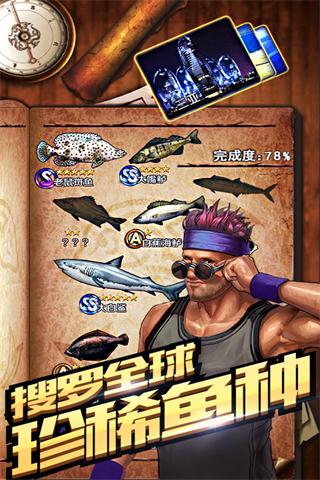
Then there is the collection of illustrations, which is the real main line of the game. Each fish species has its own clear time and water preference. You can just check it in the illustrated book. I didn't look carefully at first. I just relied on flicking the rod blindly, and the collection efficiency was pitifully low. Open the illustrated book and you will find that each fish has its appearance conditions marked. For example, some fish like coral areas, some fish only appear after six o'clock in the evening, and some fish only bite the hook when the weather system is rainy. If you set a clear target before going out, you can catch three new species in twenty minutes, which is ten times better than fishing blindly for two hours without a target.
Fishing bait is also particular. Each kind of bait has different appeal. The biggest loss in the early stage is buying high-grade bait to use in lower waters. The fish is hooked, but what is pulled up is still a small fish, which is a complete waste of money. My suggestion is to fish in ordinary waters with the earthworms provided by the system, and save the advanced baits for unlocking new fishing spots before using them. The effect is outstanding.
This is the easiest area for beginners to fall into when it comes to aquarium farming. When I see a good-looking fish, I want to put it in. As a result, the aquarium is crowded with a bunch of ornamental fish that cannot be sold for much money. The fish still occupy the space and cannot produce gold coins. The fish in the aquarium can produce gold coins and props. The efficiency of production depends on the quality and quantity of the fish. I have actually measured that if six fish of the same quality are put into an aquarium, the output efficiency is about 40% higher than ten fish of mixed quality. So don't stuff all kinds of fish into it, either stuff them all with high value or stuff them with good food. Mixing and matching will be the most disadvantageous.
In terms of cultivation, there is another operation that must be done every day, which is to interact with the aquarium. Click the bubble on the head of each fish to increase the favorability. When the favorability level is full, the fish will spawn a treasure chest, which can contain bait and diamond fragments. When you go online every day, you click on the aquarium first. It only takes two minutes, but the profit is equivalent to a lucky draw.
Regarding whether or not to pay for krypton, I made it clear that this game can be played with zero krypton. The main sources of diamonds are the achievement system and daily tasks. The one-time rewards given by the achievement system are very generous, and the rewards given by the tasks are small but stable. The only suggestion is not to use diamonds to draw fishing rods, but to use them to open warehouse grids or speed up aquariums. These two pitfalls really affect the experience.
There is another thing that novices tend to overlook, which is the ranking list in the social system. It is settled once a week and ranked according to the total number of fish caught and the number. The top 100 will be given fragments of a limited fish species. This fish species can be reproduced, and the offspring can be sold in the trading house for gold coins. It's like buying high-value fish once a week for free. Don't be lazy. If you fish for two hours, you can basically get into the top 100.
Finally, let's talk about the map mechanism. Occasionally, there will be golden fish shadows with a halo on the body in several large maps. This is a special event fish. If you catch it, you will get a lottery ticket. The lottery ticket is the only way to obtain rare aquarium decorations, and decorations can directly increase the output efficiency of the entire aquarium. When you encounter this kind of fish, don't worry about anything else, just swing the rod until it bites the hook.
To put it bluntly, the logic of this game is to let you fish as soon as you go online, collect the vegetables after fishing, and fish again after collecting the vegetables, forming a smooth cycle. The most profitable way to play in the early stage is to quickly unlock new fishing grounds. The fish species illustration rewards in new fishing grounds are much greater than repeated fishing for old fish. I did some calculations. On the first day, I could only get 5,000 gold coins by lighting up all the fish species in the old fishing spot, but on the second day, I could get 12,000 gold coins by unlocking the new map and completing the illustrated book. The gap was more than doubled. Therefore, picture promotion is always the first priority, illustration collection is second, and aquarium development is third. Don't reverse the order.
There are a bit too many code words, but every piece of data is data that I have personally tested and verified. If you play according to this idea, if you are lucky, you can avoid all the pitfalls I have stepped on these days in three days. I wish you all a happy fishing. If you have any questions, see them in the comment section. I will reply as soon as I see them.