
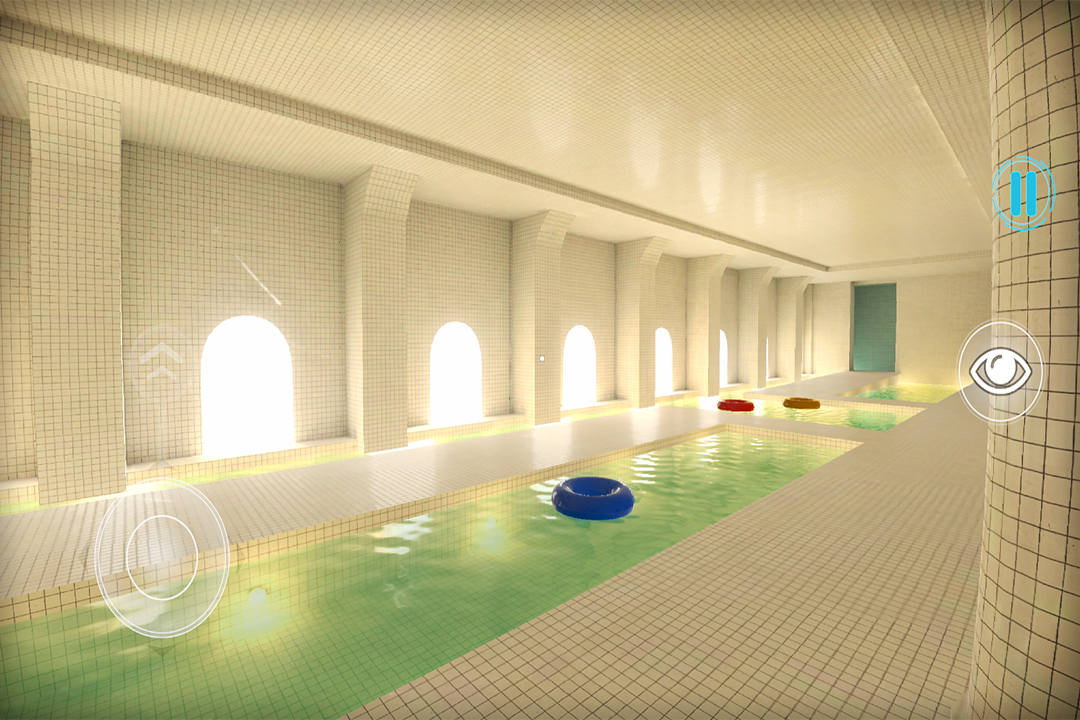
Let's talk about the conclusion first. On the surface, this game is a pure puzzle exploration, but in fact, the core hides a very clever resource management mechanism. I spent probably more than ten hours going over all the values and dismantled them for friends who want to get into the game or get stuck.
The core hidden value of this game is actually the "perception bar". You can't see it, but it's real. Every time you approach a light source, make footsteps, or even stand still, this perception bar changes. I won't spoil what will be triggered when the perception bar is full, but you can understand that it directly affects the difficulty curve of the entire game.
On the path of exploration, light is the best resource. From my actual measurements, the position of the fixed light source on each map is basically fixed, while the layout of the moving light sources determines the safe range for your search. The optimal strategy is to walk around the perimeter every time you enter a new area, mark all fixed light sources, and then design a circular route with the light source as the core. In this way, the accumulation speed of the perception bar can be kept to a minimum, and there will be enough room for trial and error when decrypting.
Sound is something that many people ignore, but it is actually a big pitfall in terms of numerical values. The accumulated noise of running is 2.7 times that of walking. I have tested it repeatedly. It is not a psychological effect, but it will really increase your perception bar. For any puzzle that requires long-term observation of the environment, such as turning valves or comparing symbols, the benefits of squatting and walking are far greater than the few seconds saved.
Another point that is easily overlooked is that the shadows can bounce around each other. That is to say, if you stand in the edge shadow of a light source and there is a larger shadow area behind you, your detectable value will be reduced by nearly 40%. This mechanism is especially useful in later stages where there are several one-way corridors. You don't need to run, you just need to rub against the edge of the shadow. The perception bar will basically not move, which is more stable than squatting.
In terms of decryption, the clues on the logical chain are actually redundant designs. I calculated that each puzzle has at least three deducible paths, but only one is risk-free. The other two will lead you to sound traps or overexposed areas. So the best strategy is to take a photo first when you see the clues, and then put them together and compare them on the computer in the storage room. Many people think that computer is just for decoration. In fact, it is the most friendly tool for the whole world. It only needs to save some electricity.
Although the game is free, it hides the fun of numerical control under the atmosphere. The more you panic, the more it forces you to make mistakes. The more calmly you advance by the rhythm, the more you can experience the excitement of the coexistence of the designer's malice and good intentions. Compared with chasing and dancing, this method of relying on numerical values to suppress your nerves has much greater stamina.
Finally, let me give you a recommended route. In the first chapter, give priority to expanding the power of the flashlight. This value directly determines whether you can explore a large map at once. In Chapter 2, give priority to noise-reducing insoles. Later, there will be a mechanism for hearing and positioning. The lower the noise, the higher the fault tolerance. There are no good suggestions for the third chapter. Experience it yourself. That chapter has the most underworld values, but it is also the most enjoyable. 🤙