
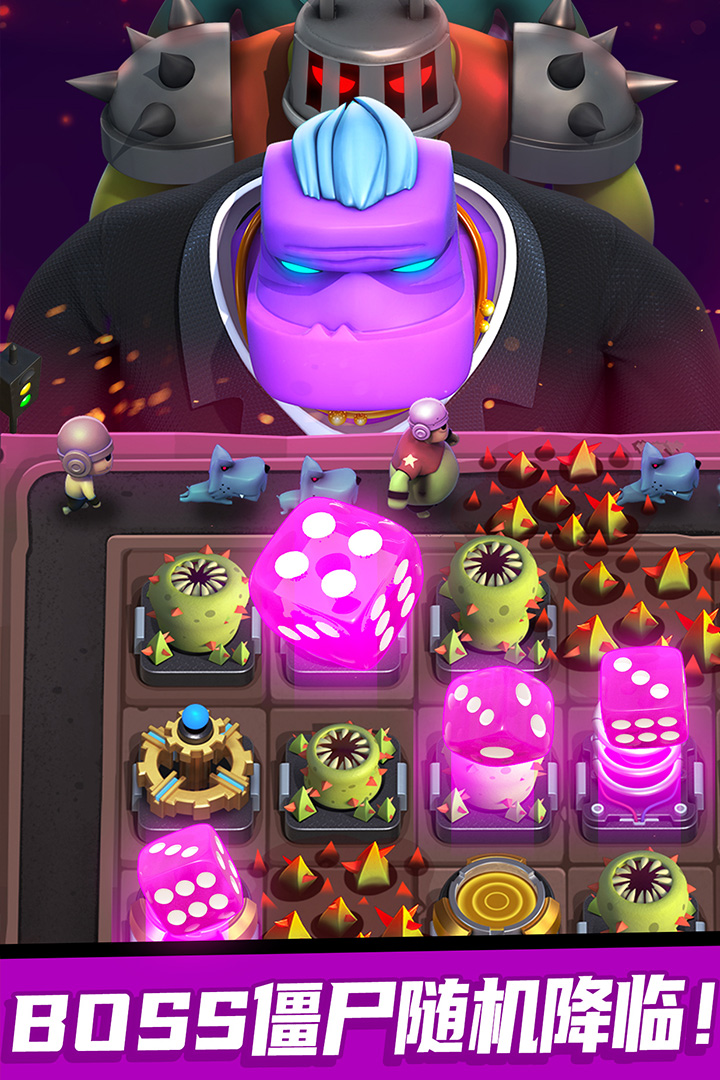
Let's talk about the core numerical system first. Each tower in this game has attack power, attack speed, range and probability of special effects, but what really widens the gap is the "dynamic tower defense change" mechanism. Simply put, your tower is not static, it will trigger upgrades or mutations during combat based on the resources you consume. At this time, we have to calculate an account: should we prioritize the levels of single towers, or should we spread them out evenly?
I tested it for several days and found that the optimal solution in the early and mid-term is actually "Juhuasuan". Because the zombies in the game have a setting of increasing blood volume, the physical strength of each wave of monsters will increase by about 15% after 5 waves. If you lay out the towers evenly, you will find that the output is diluted and monsters are missed. My personal recommended rhythm is: quickly build two basic towers in the first 3 waves before the start, concentrate gold coins to upgrade one of them before the 4th wave, feed it to the second stage, so that the initial firepower can directly kill ordinary zombies in seconds, and the remaining health is given to the second tower for last-minute damage. In this way, the output utilization rate can be increased by about 30%, which is especially suitable when resources are tight in the early stage.
Let's talk about the strategic level. This game is also called "Scheming Simulator" because its most exciting gameplay is to put yourself in the zombie's "skill type". Some zombies have built-in shields and charge, and some will split and become smaller. At this time, if you don't have enough damage, you must use the reduction tower and control tower to buy time. Let me share with you the cost-performance formula I personally tested: When facing shield monsters, the basic income of a first-level deceleration tower is approximately 1.8 times that of a first-level cannon. However, as long as the deceleration tower is placed in the first half of the monster's route, the income can be even higher, because it can give the back row towers a complete shooting opportunity.
The most extreme example is the BOSS level. Many novices will use anti-aircraft cannons to attack, but according to actual testing, the best strategy is to use a small machine gun with low attack power but extremely fast attack speed to stack the "hard attack" effect, and pair it with a precise sniper tower for critical hits. I have calculated that this can grind down nearly 600% of the BOSS's effective HP, and the cost is more than half lower than going directly to the heavy tower.
Finally, let's talk about numerical programming for development. The charging model of this game is not overwhelming, but resources must be spent wisely. My suggestion is that the level of the main tower should be a "multiple of 3" to break through, because the special effects bonuses unlocked every three levels are the most stable, and random talents will flatten your combat power curve. When you have a custom arena in the mid-term, and then adjust the tower priorities according to the terrain of different maps, you will be able to experience a real brain-burning game.
All in all, don't think of it as an ordinary tower defense game. It's more interesting as a “resource conversion simulator”. If you have any questions about the lineup, you can share them in the comment area. I study this set of numerical logic basically every day. 😎