
As a casual game that focuses on puzzle solving and clue collection, at first glance it seems to be incomparable with 5v5 confrontations like KPL, but if you really take a closer look, its "competitive environment" is actually hidden in the rhythm of clue delivery in each level. Planning a subtle game between "misjudgment punishment" and "player growth" is a bit like version adjustment.
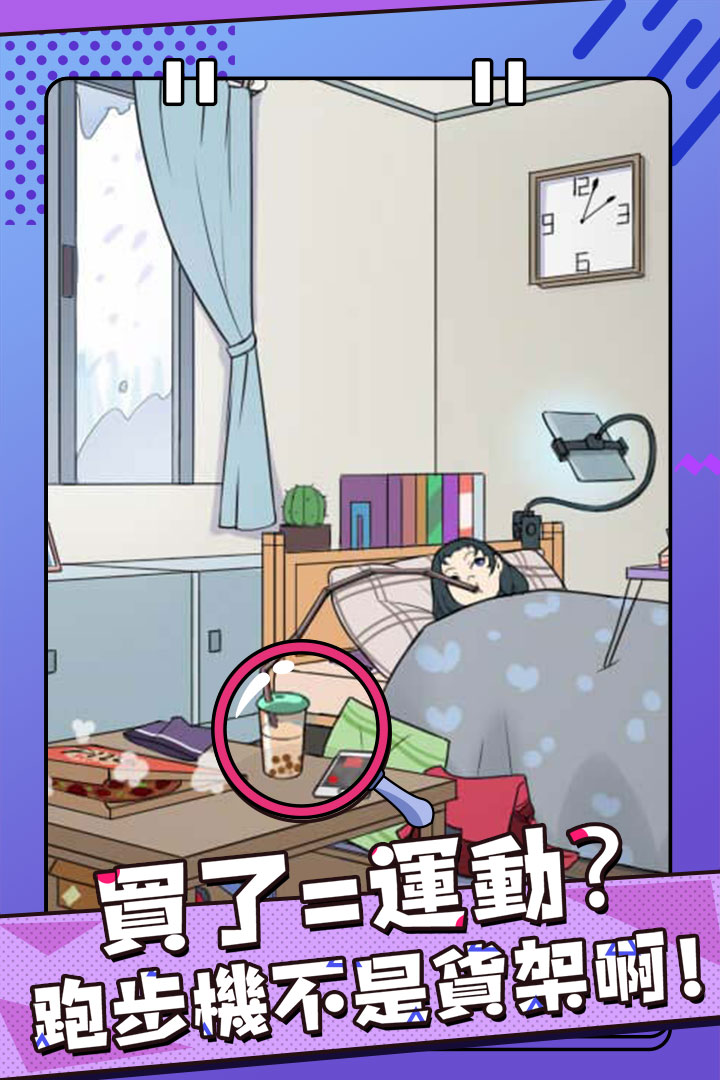
Let's talk about the core mechanism first: if you submit wrong clues, you will be beaten up by the heroine. This setting is actually very "oppressive" in the early stage, which means that if you make a mistake in the game, you will be killed. But if you play carefully, you will find that the game does not maliciously block you, and there is a "logical closed loop" between the clues. For example, the items you observe in the room are often hiddenly related to the heroine's character story line. As long as you are careful enough, you can find the opponent's flaws like a review game.
In terms of balance, I think the current version has three highlights:
First, the number of clues is controlled just right. Each scene has about seven or eight interactive points, but only two or three are really effective. This is interesting because you need to prevent being misled by "false clues" and also determine which ones are smoke bombs. This is like the BP stage. The opponent deliberately releases a strong version of a hero. Do you want to take it? If you take it, you may fall into a trap, but if you don't, you'll be itchy.
Second, the "difficulty curve" of different heroines is obviously different. Some female protagonists are obviously more "assassin-style", with clues hidden very deep, requiring you to frequently switch perspectives or even drag scenes; others are more "tank-style", with straightforward clues but requiring you to integrate a large amount of dialogue content, which tests your ability to summarize information. I think this kind of differentiation in positioning is relatively successful, allowing players of different styles to find their "natal roles" that suit them.
The third is about the correction of error punishment. Most mobile games will have a "numerical expansion" process, but this game will give you a "review" opportunity at the end of each chapter. Even if you made the wrong choice before, you can go back to the clues you got before and re-reason, without being beaten to death with a stick. This mechanism is more sensible than simply lowering the difficulty. It is equivalent to giving players a timeout to give the players room to adjust, rather than directly kicking you from the ban position.
Of course, there are still some parts of the current version that make me feel like "the value of the rising star has not been adjusted properly", which is a bit of a headache😅. For example, the interaction points in some scenes are designed to be too hidden, especially when fingers are crossed across the screen and accidentally touched, resulting in wrong answer judgments. This misjudgment at the action level is more frustrating than errors in logical reasoning. It is as frustrating as being ahead of the game but being counterattacked due to network delays. I hope that in the future, the official can optimize the boundaries of the judgment area just like adjusting the feel of the hero.
Generally speaking, in the circle of casual puzzle solving, "Miss Contrast" can be regarded as a breath of fresh air for being able to maintain the balance line of "requiring thinking but not excessively difficult". There is no back-to-back mechanical difficulty. Instead, it is like a psychological game. Each clue map is like a small gank attempt. Success or failure lies in the details.
I hope that the new chapter will add more "jungle resources"-style hidden branches so that veteran players can also experience more variables. After all, version updates are the best catalyst to maintain competitive vitality📈.