
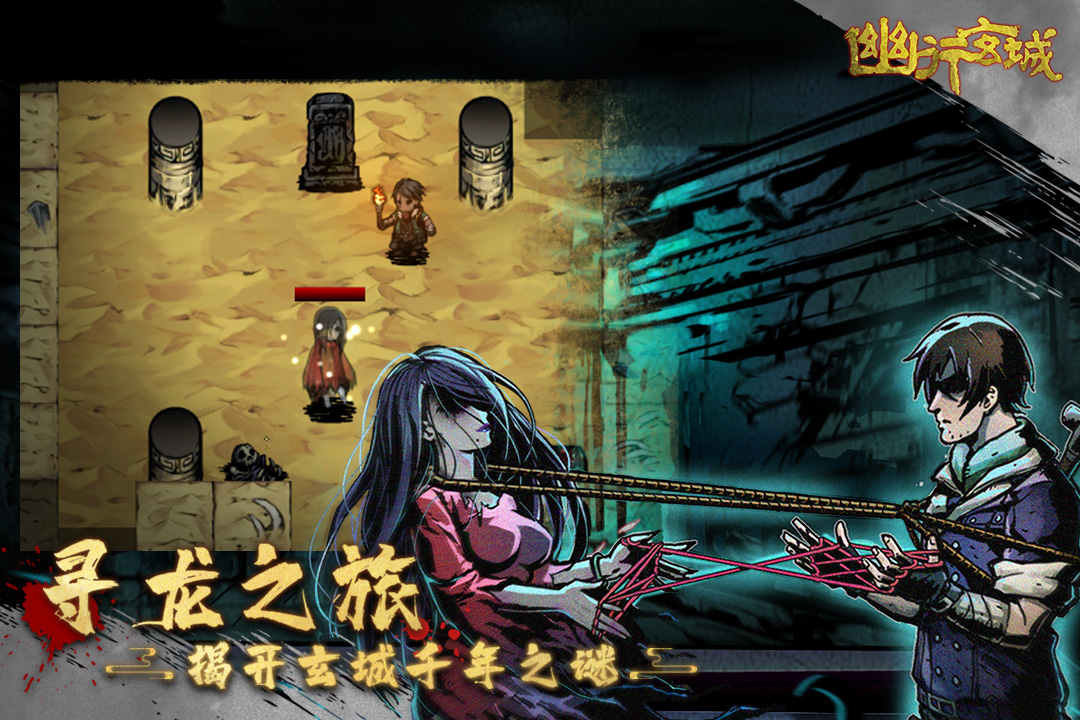
First, let's start with the conclusion. Although this game is free to download, the underlying stat design is unexpectedly solid—it's not one of those reskinned cash-grab games where one hit does 999 damage. Over the past couple of days, I went through the monster health and character growth curves for the first two chapters, and I found that the developers have struck a rather subtle balance between 'depth of development' and 'strategic forgiveness,' which is worth discussing in detail.
Let's first look at the core four-person squad mechanic. The game does not have the traditional class triangle; instead, roles are distinguished by 'character role tags.' For example, Boss Pan is a typical armor breaker. His secondary skill, which reduces defense by a percentage, is extremely effective against some high-armor mid-game monsters. Doing the math, against elite monsters with over 1500 armor, the damage boost from armor reduction can exceed 40%, which is much better than simply stacking critical hit stats. So the first suggestion is not to blindly favor high-rarity characters in the early to mid-game—you need to consider skill coefficients and the combined effects of rare tags like armor reduction and vulnerability.
Next, let's talk about the hidden line in stat growth. I found that character attack growth roughly splits into two stages: linear growth before level 30, and after level 30, each level up gives about 7% less benefit. What does this mean? Forcing levels is less effective than farming runic dungeons. Although the rune system in the game seems random, the three-piece bonuses of each rune set are fixed. For example, the Xing Niao set calculates follow-up damage as a percentage of the target's current HP. This is very volatile against bosses but extremely efficient for clearing minor enemies. The optimal strategy is actually to swap equipment according to dungeon conditions rather than sticking to one set the whole way.
Regarding resource allocation, there's a common pitfall. Storyline-given A-rank characters, such as Little Bell, have a passive skill that gives a chance to get an extra item when opening a chest. The benefit of this skill decreases in late-game exploration modes. I calculated that fully upgrading it only gives about an 8% increase in drops. But in the early game, spending a lot of resources on this passive can slow down your main team's focused output. The recommendation is to fully upgrade main attack skills first, and only invest in utility skills enough to trigger them.
Finally, let's talk about the often overlooked 'Synergy System.' Many people think it's trivial, but in actual combat, the attribute that improves the most from same-class teammate bonds is 'action speed,' this hidden attribute.Numerically, when two members of the same class fight side by side, there is a 15% chance to act again after taking a turn. Combined with high combo characters, like Liu Sanlian's multi-hit attacks, triggering a second action is equivalent to getting an extra burst for free. This probability can stack in the Secret Realm mode. So when forming a team, try to pair the same class together; the margin for error is much higher than mixing different classes.
After playing for dozens of hours, I feel that the true threshold of this game isn't in execution, but in whether you can mentally calculate this 'income minus cost.' You need to have expectations for each dungeon's stamina consumption, expected drops, silver for equipment repairs, and potion usage. Don't just blindly charge in—let the numbers speak, and you'll save yourself a lot of detours. If anyone has a different opinion, feel free to debate in the comments. This is what I've learned from actual data tests. Don't agree? Then please bring the data. 😏