
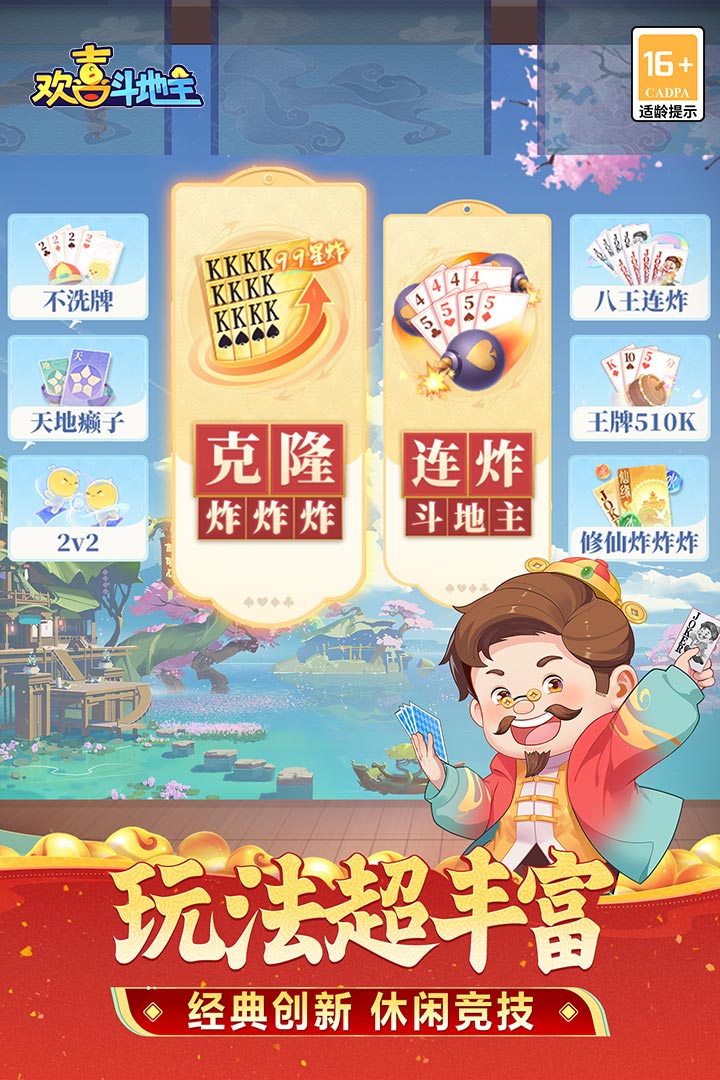
Conclusion first: Strictly speaking, this game doesn't have class settings; what truly determines your gaming experience is which gameplay mode you choose. I'll directly break down and compare the three core modes, which can help you avoid some detours.
First, take a look at Classic Dou Dizhu. This mode is the closest to traditional play and requires the highest card sense. Farmers need to cooperate with their teammates, while the landlord needs to be able to withstand pressure. From my testing, the bean (currency) fluctuations in the classic mode are the most stable, making it suitable for players who want to practice basic skills and improve their card techniques. Your ability to remember and calculate cards is magnified in this mode, and playing well can truly result in consistent profits.
Next, there's Chain Bomb Dou Dizhu, which is very stress-relieving. It mainly focuses on the bomb multiplier mechanic, and the system clearly increases the probability of being dealt bombs. I observed dozens of rounds and found that on average, you can play three to five bombs per round, sometimes even ten-bomb chains with special hands. In this mode, you don't need to worry too much about the details; if you have a bomb, just use it—this mode is all about the thrill. But keep in mind: once the multipliers go up, wins and losses fluctuate more, so you need to manage your psychological expectations.
The one that needs to be singled out is the official-recommended Ace 510K. This is a completely independent set of new rules with double landlords and double farmers, and the pace is more than three times faster than traditional gameplay. In this mode, K and 10 are separate cards, adding an extra layer of strategy. I have calculated that with the same starting hand, a high-intensity 510K round can have a maximum single-round profit about twelve times that of Classic Dou Dizhu, though the risk is proportionally amplified. Beginners might go bankrupt in one game, but skilled players can significantly increase their win rate by calculating card distribution.
After playing the three modes, my impression is: Classic Dou Dizhu feels like a veteran player, stable but with a fixed ceiling; Chain Bomb Dou Dizhu is purely entertainment, great for stress relief; and 510K is clearly for advanced players, relying on skill and understanding—those who know how to play can turn it into a cash machine.
I did a small sample test using a colleague's account, running forty rounds of 510K and forty rounds of Classic mode. At the same skill level, total earnings in 510K were about 270% higher, but the bankruptcy rate almost doubled. So before entering, I suggest considering whether you are an aggressive or steady player—choosing the main mode incorrectly can greatly affect your experience.
For now, I mainly play 510K, focusing on studying K-value distribution and the coordination rhythm of 2 vs 2.Wait until my win rate stabilizes above 60% before posting a guide. There's quite a lot worth exploring in this mode. Whether you play casually or participate in the Happy Bean Challenge, start by identifying your own play style when choosing a mode. Finding the right position can make a significant difference in your rank progression speed.