
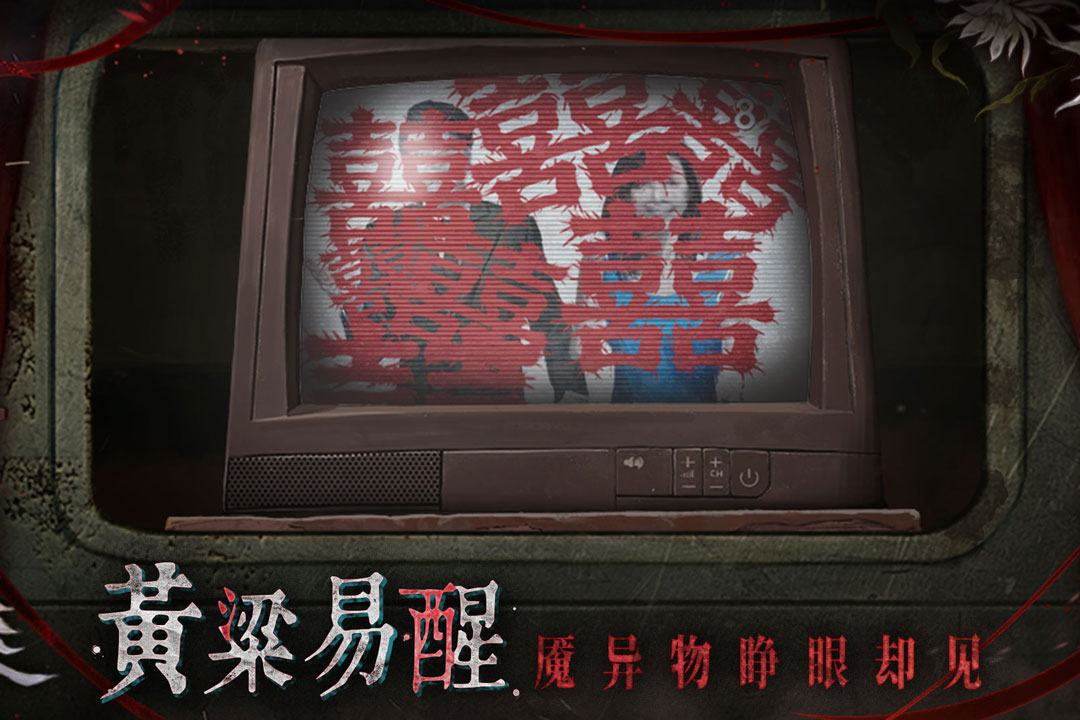
Lately, quite a few people in Qitan Dimension have been asking about 'Paper Bride 9: Luo Fu Dream.' As a long-time reviewer, I'll first lay out my scoring criteria. My standard isn't 'if it's scary, it's a masterpiece; if it's not scary, it's terrible,' but is based on five dimensions: visual atmosphere, gameplay and puzzles, story narrative, paid experience, and social replayability, each worth 20 points, for a total of 100. Scoring this way may not be absolutely fair, but at least it can clarify what's good and where points are deducted. 🎮
I would give the atmosphere of the scenes 18 points. This work still uses the hand-drawn 2D style of the 'Paper Bride' series. The night in Yichang Town, the green trains, the paper craft shops, and the red candles with white banners all have a lot of character. The dream sequences use soft lighting and blur, while the real-world scenes lean toward cold and gray tones. The transitions do give a sense of 'beautiful dream turning into nightmare.' I deducted 2 points because some scene textures are obviously reused, the character sprites have limited actions, and certain shots linger too long, giving a bit of a PowerPoint feel. 🕯️
The gameplay and puzzles get 16 points. The core is still clicking to explore, combining items, and solving mechanisms, plus some folk mini-games. For example, in the chapter on the late-night train, I have to compare the place names on the ticket with the station signs outside the window, and then adjust the direction of the figurines—this design feels quite immersive. The puzzles are smooth in the early stages, but in the mid-game, you need to be familiar with elements like talismans, opera, and the Five Elements. When stuck, you can watch ads to get hints, but some interactive points are not very obvious, and the click detection is sometimes a bit narrow, making it easy to get stuck going in circles. 🚂
I give the story narrative 17 points. The concept of a dream lover is very captivating, moving from 'a deep spiritual connection' to 'does they really exist,' and then connecting to the strange tales of Yichang Town, the pacing is solid. The amount of text and voice acting are both on point, and when the suona plays, I get goosebumps. Points are deducted because in the middle some clues are artificially patched through diaries and notes, and the plot twist makes some characters' motivations seem a bit rushed. 👻
Paid experience gets 19 points. The main game is free, with no mandatory in-app purchases; the main advertising points are in hints and a small amount of revives and skips, which is quite decent in today's mobile games. However, the presence of ads is noticeable, and frequently watching hints interrupts immersion, so I wouldn't blindly give full marks just because it's 'free.' Being free is a plus, but it shouldn't overshadow the impact on the experience. 💰
Social replay gets 12 points. The single-player linear process mainly relies on forum discussions for plot and exchanging puzzle-solving ideas. After clearing the game, the replay value mainly lies in collection and hidden endings. 📝 If you don't originally enjoy puzzles, the motivation to replay will be somewhat weaker.
Overall, it scores 82 points, which converts to 8.2. Recommended for players who enjoy Chinese-style horror, story puzzles, and folklore tales. If you're afraid of jump scares or are particularly sensitive to ads, it's advised to try a short cloud playthrough first before deciding. Tip: If you get stuck, first check your backpack for possible combinations, then pay attention to objects in the scene that are a different color; it's best to casually note the order of opera lyrics and talisman papers. Don't play alone at night with headphones on, it will really make your back hair stand on end. 🌙